Reserve it at BN.com & pick it up in 60 minutes at your local store.

Enter a zip code
(Hardcover)
| More Formats | |
|---|---|
| Available in eBook | $11.16 |
| Paperback - Reprint | $11.16 |
| MP3 Book - Abridged | $12.43 |
My lady, Fiammetta Bianchini, was plucking her eyebrows and biting color into her lips when the unthinkable happened and the Holy Roman Emperor’s army blew a hole in the wall of God’s eternal city, letting in a flood of half-starved, half-crazed troops bent on pillage and punishment.
Thus begins In the Company of the Courtesan, Sarah Dunant’s epic novel of life in Renaissance Italy. Escaping the sack of Rome in 1527, with their stomachs churning on the jewels they have swallowed, the courtesan Fiammetta and her dwarf companion, Bucino, head for Venice, the shimmering city born out of water to become a miracle of east-west trade: rich and rancid, pious and profitable, beautiful and squalid.
With a mix of courage and cunning they infiltrate Venetian society. Together they make the perfect partnership: the sharp-tongued, sharp-witted dwarf, and his vibrant mistress, trained from birth to charm, entertain, and satisfy men who have the money to support her.
Yet as their fortunes rise, this perfect partnership comes under threat, from the searing passion of a lover who wants more than his allotted nights to the attentions of an admiring Turk in search of human novelties for his sultan’s court. But Fiammetta and Bucino’s greatest challenge comes from a young crippled woman, a blind healer who insinuates herself into their lives and hearts with devastating consequences for them all.
A story of desire and deception, sin and religion, loyalty and friendship, In the Company of the Courtesan paints a portrait of one of the world’s greatest cities at its most potent moment in history: It is a picturethat remains vivid long after the final page.

The novel's plot is not particularly tight, but there are some great set-pieces, notably a muscular and violent battle between the Arsenale workers and the Nicoletti fishermen. Otherwise, this amiable, intelligent story ambles along pretty much of its own accord, toward a good surprise at the end.

More Reviews and RecommendationsBritish novelist, broadcaster, and critic Sarah Dunant is well known on both sides of the pond for her bestselling series of mysteries featuring sleuth Hannah Wolfe. With her first historical novel, The Birth of Venus, Dunant explores another scene: Renaissance-era Florence.
More About the AuthorReader Rating:
See Detailed Ratings
November 11, 2009: In her novel, In the Company of the Courtesan, Sarah Dunant is able to mix fantasy and reality in a most entertaining fashion. By intermingling characters of her own creation with actual people who lived in 16th century Italy she creates a world in which the two main characters, Fiammetta Bianchini and Bucino Teodoldi, take on roles of seeming historical significance.
In the Company of the Courtesan is the story of Bucino Teodoldi, a dwarf in the service of Fiammetta Bianchini, an Italian courtesan, during the sacking of Rome. After opening her home to the attacking soldiers in order to escape death for herself and her servants, Fiammetta is forced to flee with Bucino to her hometown of Venice to escape when her plan is turned against her. The story follows the efforts of Bucino and the healer La Draga to nurse Fiammetta back to health and her subsequent re-entry into the world of Venetian courtesans. Dunant introduces historical figures and events throughout the novel in order to advance her story. She begins with the sacking of Rome in 1527, an event which did, in fact, occur. Dunant speaks of the Lutherans and their attack on the city as well as their siege of Pope Clement VII, who was in reality the pope at that time, and who Dunant linked to the fictional Fiammetta. This is the first of the notable instances in which her fictional characters are linked to historical figures. Another important link between fiction and reality is created when Fiammetta meets and subsequently models for the painter Tiziano Vecelli, more commonly known in the art world as Titian. By forging this link, Dunant is able to position Fiammetta as the subject of one of Titian's most famous paintings, the "Venus of Urbino," which serves to portray Fiammetta as a woman who has great historical significance even though she never actually existed. It is these fabricated links between the fictional and the factual that allow the reader to suspend reality and surrender to the story, even if the reader is properly educated in matters of both history and art.Dunant also uses historical events and locations to lend the novel an air of authenticity. Beginning with the previously mentioned sacking of Rome, Dunant is able to place Fiammetta and Bucino in an environment which is believable, if not necessarily familiar to the reader. Additionally, the use of such locales as Venice and the islands surrounding Italy give the reader the ability to follow the plot geographically. Dunant is able to use fictional characters in places such as the Jewish Ghetto to not only advance the plot but to involve the reader in plot lines outside of the main. Likewise, the inclusion of varied locales is also able to advance the story of Bucino and to develop the character of his would-be love interest, La Draga, with Bucino at one point following her not only to her home within Venice, but also to her home island off of the Italian coast.By mixing historical fact with fictional creation Sarah Dunant is able to create a believable world for her characters to live, work, love, and die in. She intertwines the two with what at times appears to be surgical precision, developing a story which rarely lags and is greatly entertaining, from the sacking of Rome to the Venice of the 16th century. The reader is able to develop emotional attachments and connections with the fictional characters because they are so skillfully placed in a world of...Reader Rating:
See Detailed Ratings
September 19, 2009: Have yet to read Dunant's more modern books, but have read all of her historicals and LOVE them all. Her use of language is elegant, her characters original, and I always learn about the time and politics, which is a lovely bonus. Company and Sacred Hearts are my favorite.
Name:
Sarah Dunant
Also Known As:
Peter Dunant
Current Home:
London, England
Date of Birth:
August 08, 1950
Place of Birth:
London, England
Education:
B.A., Cambridge University, 1973
Awards:
Silver Dagger Award for Crime Fiction, 1993
British novelist, broadcaster, and critic Sarah Dunant is well known on both sides of the pond for her bestselling series of mysteries featuring sleuth Hannah Wolfe. Other novels feature the challenging, often absurd, choices women face for love and identity.
Dunant's first two novels were actually co-authored with Peter Busby, thus creating their pseudonym, Peter Dunant. In Exterminating Angels (1983), whether they're called terrorists or modern-day Robin Hoods, the Exterminating Angels are out to set the record straight. For them, the ends always justify the means when righting the wrongs of the world. The political thriller Intensive Care (1986) describes a chance meeting at the site of an explosion in London.
The first book to be released under her own name was Snow Storms in a Hot Climate (1987), and features Marla Masterson. Marla, a young British professor of Anglo Saxon Literature goes to New York City to rescue a friend from her drug-addled, abusive boyfriend, but not before a murder mystery ensnares them all.
Three years later, Dunant introduced readers to Hannah Wolfe, a tough and witty Private Investigator. In Birth Marks (1990), Wolfe is hired to find a missing ballerina. Unfortunately, the dancer is found by the police -- eight months pregnant and at the bottom of the Thames. When everyone but Wolfe writes off the young single woman's death as a suicide, Wolfe pushes her investigation into London's dance companies and powerful Parisian families, searching for the father. Wolfe's reputation is put on the chopping block in Fatlands (1993). Wolfe finds herself on the trail of a violent animal rights activist group after they kill the daughter of a wealthy scientist for using animals in his experiments. The novel won Dunant a Silver Dagger award for Crime Fiction. Disguised as a customer, Wolfe investigates a string of sabotage at the Castle Dean health spa in Under My Skin (1995) and soon learns that, to some, beauty is something to die -- or kill -- for.
Breaking from her Hannah Wolfe series, Dunant's next release explores the line between victim and victor. In Transgressions (1997), translator Lizzie Skvorecky is making a living translating cheap Czech thrillers into English. When the strange events of the novels seem to occur in her real life, Lizzie realizes that someone -- or something -- is tampering with her reality, and accepts the violent challenge to her sanity. Kirkus reviews describes the novel as "an unsettling, often chilling, portrait of a compulsive predator and the woman who refuses to be his prey."
Mapping the Edge (1999) also portrays a woman's unusual challenges. When Anna, a single mother, takes a short vacation to Italy, leaving her six-year-old daughter with trusted friends, no one thinks twice. Until she doesn't return when scheduled. Anna's friends and her daughter endure the painful waiting while Dunant offers two explanations of Anna's disappearance. What if Anna abandoned the responsibility of motherhood to follow a hot love affair? Or perhaps Anna's life is in the hands of a sadistic killer.
Along with writing fiction, Dunant has also edited two works of non-fiction. War of the Words: The Politically Correct Debate (1994) debates the ever-changing idea of what is "acceptable" and the effect political correctness has on Liberalism. In The Age of Anxiety (1999), ten essayists discuss their anxiety -- or optimism -- for issues such as technology, family, and the end of the millennium.
Dunant's 2004 release marks her foray into historical fiction. The Birth of Venus captures the passion and the politics of deMedici Florence in the grips of a fundamentalist religious overhaul. As the city starts to purge itself of "the low and vulgar arts," the novel's heroine, Alessandra, falls in love with a young, suffering painter. Although her family marries her to a much older man, it is mostly a dismal marriage of convenience and she has a surprisingly large amount of time to spend at the side of her true love. Intelligent and daring, Duanant has combined a love story, a thriller and a historical novel in telling Alessandra's quest to find and protect her passions.
In our interview, Dunant shared some fun and fascinating facts about herself with us:
"I once worked as a hostess in a Japanese nightclub."
"My left foot is bigger than my right."
"I cannot whistle (no Humphrey Bogart for me, then)."
"Alas I don't have time to relax, although I am trying. The most important things in my life are my work, my children, my friends, and the possibility of a plane ticket to somewhere I have not yet been. When my kids grow up I want to have enough energy to get out a rucksack and take a long trip without a due-back-by date and the wonder to be changed by what I discover en route. Though right at this moment what I would like most is to remember where I put the car keys."
"And when it comes to writing, I just want to say that the novel is not the author. Just as the life is not the work or the work the life;instead literature is a kind of alchemy: turning lead into gold. Or at least that's the ambition."
What was the book that most influenced your life or your career as a writer -- and why?
Oh, this is an utterly impossible question!!! Anyone who can come up with only one book must be lying. I can think of literally dozens at different stages of my life. Every one of them was awesome at and of the moment. So, I read every Thomas Hardy novel when I was 15 and wept buckets over how cruel fate was, but was secretly entranced by the nihilism -- as only 15-year-olds can be.
Spartacus by Howard Fast, which I discovered having seen the Stanley Kubrick film, made me mad for Roman history for a whole two years, Edith Sitwell's biography of Elizabeth I made me decide to be a historian, Iris Murdoch's The Bell made me want to become a philosopher and a writer. Tolstoy's Anna Karenina made me wish to be married just so I could be unfaithful.
Thérèse Raquin made me think of crime. Patricia Highsmith's The Talented Mr. Ripley convinced me I might get away with it and got me writing mysteries. Toni Morrison's Beloved made me understand African-American history in a way I never had before, and E. M. Forster's visions of Italy in A Room with a View and Where Angels Fear to Tread had me dreaming of Florence long before I ever thought of writing about it.
I could go on and on. Writers are readers. That is how the love affair starts. I think it is like a river that flows in two directions at once. The worlds you enter and the worlds you create are both part of the intoxication of stories. On a desert island, if I had to choose one book I'd shoot myself.
What are your favorite books, and what makes them special to you?
What are some of your favorite films, and what makes them unforgettable to you?
We don't have the space for this -- live for movies. They are like books -- indispensable to life. I can barely imagine what it must have been like in a world where there weren't any.
So, here are a few:
What types of music do you like? Is there any particular kind you like to listen to when you're writing?
With the exception of John Cage's four minutes of silence and whatever is currently topping the hit parade, there isn't a kind of music I can't listen to. I was young with rock' n' roll, grew into country, matured to the blues, and am growing older into classical. I will probably die to J. S. Bach.
If you had a book club, what would it be reading -- and why?
Proust's À la recherche de temps perdu. In English! Because then I would have to read it -- I'll never do it otherwise.
What are your favorite kinds of books to give -- and get -- as gifts?
Art books. Books you can sink into visually as well as verbally. I recently wrote a big article on Leonardo da Vinci and got two magnificent volumes that I could never have afforded to buy. I can barely manage to pick them up, they are so large, but I can sit in bed and get lost in them night after night after night. Like having your own exhibition of great art in your bedroom and your head.
Do you have any special writing rituals? For example, what do you have on your desk when you're writing?
I only wish I had. Some writers clean the house as distraction. When I get distracted, the house stays dirty.
Mostly I find terror helpful: the feeling that I will never write this book if I don't get up and type in some new words every morning. That gets me started and then -- however badly or well it's going -- I don't stop. Actually that's not strictly true. That's how I used to do it: continuing to bang my head against a brick wall when I had problems. Now I sometimes sleep. The more experienced I have gotten at this strange process called writing, the more I rely on the subconscious coming and sometimes you have to help it. So now I go to bed, and even if I don't sleep I just let my mind wander. Either way I end up in a strange state of half consciousness. It takes a while but this way most problems solve themselves -- or at the very least leave you with a clue. When the mind is at rest, sometimes the imagination is most alive.
However, it's not foolproof, so don't get too excited....
What are you working on now?
I just finished two film scripts adapted from two of my novels, Transgressions and Mapping the Edge. They are in that no-man's-land of development now, where many films die and only a few emerge. I am not counting my chickens. Instead I am jumping off the diving board in search of the next novel -- Venice in the 1530s. Hot stuff. That's all I can tell you for now.
Many writers are hardly "overnight success" stories. How long did it take for you to get where you are today? Any rejection-slip horror stories or inspirational anecdotes?
I have been incredibly lucky -- I have been writing and published and solvent for over 20 years. On the other hand, I have also had two careers: writing and making radio and television programs. So when one was going badly, I could always take solace in the other. Self-esteem is a problem when life does not always give you the strokes you deserve or need, so two chances are better than one.
If you could choose one new writer to be "discovered," who would it be -- and why?
I'm not sure I would recommend being "discovered" -- the very word sends shivers down my spine. In my other life as critic and broadcaster, I have watched writers struggle with sudden fame, and many of them falter and lose their way under the spotlight. Real writers don't want to be celebrities. Or even rich. They want to have enough money to write and enough recognition not to feel humiliated. That's not the same as being "discovered" -- best to stay hidden.
What tips or advice do you have for writers?
I teach creative writing, and that means I see a lot of would-be writers. And though I'm not always right, I can usually tell those who are going to make it. The answer is its not just talent. Indeed, the fact that not all successful writers are wonderfully talented (and no, I'm not going to name names) and not all wonderfully talented writers are successful means you need more than the raw ability to write. You also need a clear sense of determination. Writing is hard, rejection is harder, and both are necessary. Those without the stamina for both might as well give up now. And even then, you still need luck.
Oh I do have one tip: All writing is rewriting. I know -- it sounds gnomic, but it's true.
Sarah Dunant's second historical novel thrusts us into the maelstrom of Renaissance Italy. In the Company of the Courtesan tracks the triumphs and tribulations of the clever dwarf Bucino Teodoldo and his mistress, the beautiful courtesan Fiammetta Bianchini. As Rome is sacked in 1527, this unlikely pair escape the city with nothing more than the clothes on their backs and a few swallowed jewels in their bellies. Like many other refugees, they land in Venice, where their shrewdness and allure helps them navigate the city's shadowy world of intrigue. Well researched and captivating.
My lady, Fiammetta Bianchini, was plucking her eyebrows and biting color into her lips when the unthinkable happened and the Holy Roman Emperor’s army blew a hole in the wall of God’s eternal city, letting in a flood of half-starved, half-crazed troops bent on pillage and punishment.
Thus begins In the Company of the Courtesan, Sarah Dunant’s epic novel of life in Renaissance Italy. Escaping the sack of Rome in 1527, with their stomachs churning on the jewels they have swallowed, the courtesan Fiammetta and her dwarf companion, Bucino, head for Venice, the shimmering city born out of water to become a miracle of east-west trade: rich and rancid, pious and profitable, beautiful and squalid.
With a mix of courage and cunning they infiltrate Venetian society. Together they make the perfect partnership: the sharp-tongued, sharp-witted dwarf, and his vibrant mistress, trained from birth to charm, entertain, and satisfy men who have the money to support her.
Yet as their fortunes rise, this perfect partnership comes under threat, from the searing passion of a lover who wants more than his allotted nights to the attentions of an admiring Turk in search of human novelties for his sultan’s court. But Fiammetta and Bucino’s greatest challenge comes from a young crippled woman, a blind healer who insinuates herself into their lives and hearts with devastating consequences for them all.
A story of desire and deception, sin and religion, loyalty and friendship, In the Company of the Courtesan paints a portrait of one of the world’s greatest cities at its most potent moment in history: It is a picturethat remains vivid long after the final page.
The novel's plot is not particularly tight, but there are some great set-pieces, notably a muscular and violent battle between the Arsenale workers and the Nicoletti fishermen. Otherwise, this amiable, intelligent story ambles along pretty much of its own accord, toward a good surprise at the end.
Dunant’s latest historical romp follows the fortunes of a beautiful, flame-haired courtesan, Fiammetta Bianchini, who, after escaping from the 1527 pillage of Rome, sets up shop in Venice. The novel, narrated by Fiammetta’s servant, a dwarf, chronicles the pair’s horrific scrapes and their dizzying triumphs, which include Fiammetta’s becoming Titian’s model for his “Venus of Urbino.” Along the way, Dunant presents a lively and detailed acccount of the glimmering palaces and murky alleys of Renaissance Venice, and examines the way the city’s clerics and prostitutes alike are bound by its peculiar dynamic of opulence and restraint.
Renaissance Italy enchants in Dunant's delicious second historical (after The Birth of Venus), as a wily dwarf Bucino Teodoldo recounts fantastic escapades with his mistress, celebrated courtesan Fiammetta Bianchini. Escaping the 1527 sacking of Rome with just the clothes on their backs (and a few swallowed jewels in their bellies), Fiammetta and Bucino seek refuge in Venice. Starved, stinking, her beauty destroyed, Fiammetta despairs-but through cunning, will, Bucino's indefatigable loyalty and the magic of a mysterious blind healer called La Draga, she eventually recovers. Aided by a former adversary, who now needs her as much as she needs him, Fiammetta finds a wealthy patron to establish her in her familiar glory. Through Bucino's sharp-eyed, sharp-tongued narration, Dunant crafts a vivid vision of Venetian life: the weave of politics and religion; the layers of class; the rituals, intrigue, superstitions and betrayals. Dunant's characters-the steely courtesan whose glimpse of true love nearly brings her to ruin; the shrewd and passionate dwarf who turns his abnormalities into triumph; and the healer whose mysterious powers and secrets leave an indelible mark on the duo-are irresistible throughout their shifting fortunes. (Feb.) Copyright 2005 Reed Business Information.
Dunant (The Birth of Venus) has once again secured her place as a best-selling author with this portrait of memorable characters living in volatile Renaissance Italy. This multilayered work is so elegantly written it is almost poetic in its language. Skillfully narrated by Bucino, the dwarf companion of the famous and sophisticated courtesan Fiammetta Bianchini, herself the child of a courtesan, this gripping story is about much more than sex; it deals with ever-changing feelings, friendship and loyalty, war and betrayal, politics and religion, and class differences. Fleeing the 1527 sack of Rome, Fiammetta and Bucino lose their wealth and position and are forced to start over in Venice. Stephen Hoye does a wonderful reading job; he has the ability to convey emotion and believable accents. Recommended for libraries with historical fiction collections. Scott R. DiMarco, Mansfield Univ. of Pennsylvania Copyright 2006 Reed Business Information.
Another tale of Renaissance Italy from Dunant (The Birth of Venus, 2003, etc.), this time replacing the art of painting with the art of seduction. The story begins in 1527 with the sack of Rome by (irony of ironies) the army of Holy Roman Emperor Charles V. While her neighbors barricade themselves inside their homes, Fiammetta Bianchini tells her cook to prepare a feast, gets dressed up and throws open her doors to the soldiers overturning her city, hoping that charm and hospitality will subdue invaders bent on rape and pillage. This bravura performance sets the stage for a drama that delights and dazzles from first page to last. Smart, witty and fearless, the delightful heroine is joined by an equally engaging cast of supporting characters. First among them is the dwarf Bucino, Fiammetta's business partner and closest friend. He's also the novel's narrator and, when he and his mistress move their operations to Venice, the reader's escort in the city. Bucino is an ideal guide, keen-eyed and sharp-witted, and the fact that he's a newcomer to La Serenissima ably serves the larger purposes of this intelligently structured text. The reader learns Venice's secrets as he does, and Dunant avoids the leaden exposition so common in historical fiction. She lets the life stories of Fiammetta and Bucino unfurl just as organically. Her captivating prose is restrained but eloquent, with flashes of pure poetry. Dunant uses language that feels antique without seeming ridiculous, and she treats the past as a real place rather than an amusement park. She never lets the reader forget that her Venice is a 16th-century city, offering just the right mix of raw sewage and gold-domed cathedrals, but she alsomakes it convincingly modern: truly cosmopolitan, ruled by commerce and gossip. It's the perfect setting for an enterprising whore, a resourceful dwarf and a story of love and intrigue. Rich, rewarding and wonderfully well-crafted entertainment.
Loading...1. In what way does In the Company of the Courtesan seem historically accurate to you? What details about Renaissance Italy do you think came from the author’s imagination, and what aspects of it do you think are based on her historical research of the period?
2. Do you think a character like Fiammetta could exist in today’s world? What, if anything, is modern about her?
3. What did you think of Fiammetta’s relationship with her mother, and of her mother’s influence on her life?
4. In the Company of the Courtesan is told from Bucino’s perspective. Why do you think the author wrote it this way, rather than from Fiammetta’s point of view? What are the benefits of hearing the story and seeing Venice from Bucino’s standpoint? What are the limitations?
5. We tend to think of Fiammetta’s profession as one that is very hard on women, one that doesn’t make for a happy life. On the whole, do you consider Fiammetta to be content or unhappy?
6. Did you find La Draga to be a likeable character? Did your view of her change as your reading progressed?
7. Is it accurate to describe Courtesan as a novel of “rebirth”? What are some other themes of this novel?
8. Do you think Fiammetta was truly in love with Foscari? If you don’t, how would you define their relationship? Was Bucino’s anger at this relationship justified?
9. What does sixteenth-century Venetian society have in common with our society today?
10. Why do Bucino and Fiammetta make such a good team? What makes them successful?
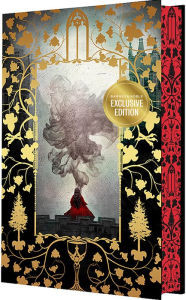
11. The picture on the cover of Courtesan is a detail from apainting by Tiziano Vecellio (Titian). When you were reading the novel, did you form an image of Fiammetta that was based on this cover image, or did you make up your own image of her? If your own, can you describe it?
12. What predictions would you make about little Fiammetta’s future life? Do you think she’ll have the same profession as her namesake?
chapter one
Rome, 1527
My lady, Fiammetta Bianchini, was plucking her eyebrows and biting color into her lips when the unthinkable happened and the Holy Roman emperor's army blew a hole in the wall of God's eternal city, letting in a flood of half-starved, half-crazed troops bent on pillage and punishment.
Italy was a living chessboard for the ambitions of half of Europe in those days. The threat of war was as regular as the harvest, alliances made in winter were broken by spring, and there were places where women bore another child by a different invading father every other year. In the great and glorious city of Rome, we had grown soft living under God's protection, but such was the instability of the times that even the holiest of fathers made unholy alliances, and a pope with Medici blood in his veins was always more prone to politics than to prayer.
In the last few days before the horror struck, Rome still couldn't bring herself to believe that her destruction was nigh. Rumors crept like bad smells through the streets. The stonemasons shoring up the city walls told of a mighty army of Spaniards, their savagery honed on the barbarians of the New World, swelled with cohorts of German Lutherans fueled on the juices of the nuns they had raped on their journey south. Yet when the Roman defense led by the nobleman Renzo de Ceri marched through the town touting for volunteers for the barricades, these same bloodthirsty giants became half-dead men marching on their knees, their assholes close to the ground to dispel all the rotting food and bad wine they had guzzled on the way. In this version, the enemy was so pathetic that,\ even were the soldiers to find the strength to lift their guns, they had no artillery to help them, and with enough stalwart Romans on the battlements, we could drown them in our piss and mockery as they tried to scale their way upward. The joys of war always talk better than they play; still, the prospect of a battle won by urine and bravura was enticing enough to attract a few adventurers with nothing to lose, including our stable boy, who left the next afternoon.
Two days later, the army arrived at the gates and my lady sent me to get him back.
On the evening streets, our louche, loud city had closed up like a clam. Those with enough money had already bought their own private armies, leaving the rest to make do with locked doors and badly boarded windows. While my gait is small and bandied, I have always had a homing pigeon's sense of direction, and for all its twists and turns, Rome had long been mapped inside my head. My lady entertained a client once, a merchant captain who mistook my deformity for a sign of God's special grace and who promised me a fortune if I could find him a way to the Indies across the open sea. But I was born with a recurring nightmare of a great bird picking me up in its claws and dropping me into an empty ocean, and for that, and other reasons, I have always been afraid of water.
As the walls came into sight, I could see neither lookouts nor sentries. Until now we had never had need of such things, our rambling fortifications being more for the delight of antiquarians than for generals. I clambered up by way of one of the side towers, my thighs thrumming from the deep tread of the steps, and stood for a moment catching my breath. Along the stone corridor of the battlement, two figures were slouched down against the wall. Above me, above them, I could make out a low wave of moaning, like the murmur of a congregation at litany in church. In that moment my need to know became greater than my terror of finding out, and I hauled myself up over uneven and broken stones as best I could until I had a glimpse above the top.
Below me, as far as the eye could see, a great plain of darkness stretched out, spiked by hundreds of flickering candles. The moaning rolled like a slow wind through the night, the sound of an army joined in prayer or talking to itself in its sleep. Until then I think even I had colluded in the myth of our invincibility. Now I knew how the Trojans must have felt as they looked down from their walls and saw the Greeks camped before them, the promise of revenge glinting off their polished shields in the moonlight. Fear spiked my gut as I scrambled back down onto the battlement, and in a fury I went to kick the sleeping sentries awake. Close to, their hoods became cowls, and I made out two young monks, barely old enough to tie their own tassels, their faces pasty and drawn. I drew myself to my full height and squared up to the first, pushing my face into his. He opened his eyes and yelled, thinking that the enemy had sent a fatheaded, smiling devil out of Hell for him early. His panic roused his companion. I put my fingers to my lips and grinned again. This time they both squealed. I've had my fair share of pleasure from scaring clerics, but at that moment I wished that they had more courage to resist me. A hungry Lutheran would have had them split on his bayonet before they might say Dominus vobiscum. They crossed themselves frantically and, when I questioned them, waved me on toward the gate at San Spirito, where, they said, the defense was stronger. The only strategy I have perfected in life is one to keep my belly full, but even I knew that San Spirito was where the city was at its most vulnerable, with Cardinal Armellini's vineyards reaching to the battlements and a farmhouse built up and into the very stones of the wall itself.
Our army, such as it was when I found it, was huddled in clumps around the building. A couple of makeshift sentries tried to stop me, but I told them I was there to join the fight, and they laughed so hard they let me through, one of them aiding me along with a kick that missed my rear by a mile. In the camp, half the men were stupid with terror, the other half stupid with drink. I never did find the stable boy, but what I saw instead convinced me that a single breach here and Rome would open up as easily as a wife's legs to her handsome neighbor.
Back home, I found my mistress awake in her bedroom, and I told her all I had seen. She listened carefully, as she always did. We talked for a while, and then, as the night folded around us, we fell silent, our minds slipping away from our present life, filled with the warmth of wealth and security, toward the horrors of a future that we could barely imagine.
By the time the attack came, at first light, we were already at work. I had roused the servants before dawn, and my lady had instructed them to lay the great table in the gold room, giving orders to the cook to slaughter the fattest of the pigs and start preparing a banquet the likes of which were usually reserved for cardinals or bankers. While there were mutterings of dissent, such was her authority--or possibly their desperation--that any plan seemed comforting at the moment, even one that appeared to make no sense.
The house had already been stripped of its more ostentatious wealth: the great agate vases, the silver plates, the majolica dishes, the gilded crystal Murano drinking glasses, and the best linens had all been stowed away three or four days before, wrapped first inside the embroidered silk hangings, then the heavy Flemish tapestries, and packed into two chests. The smaller one was so ornate with gilt and wood marquetry that it had to be covered again with burlap to save it from the damp. It had taken the cook, the stable boy, and both of the twins to drag the chests into the yard, where a great hole had been dug under the flagstones close to the servants' latrines. When they were buried and covered with a blanket of fresh feces (fear is an excellent loosener of the bowels), we let out the five pigs, bought at a greatly inflated price a few days earlier, and they rolled and kicked their way around, grunting their delight as only pigs can do in shit.
With all trace of the valuables gone, my lady had taken her great necklace--the one she had worn to the party at the Strozzi house, where the rooms had been lit by skeletons with candles in their ribs and the wine, many swore afterward, had been as rich and thick as blood--and to every servant she had given two fat pearls. The remaining ones she told them were theirs for the dividing if the chests were found unopened when the worst was over. Loyalty is a commodity that grows more expensive when times get bloody, and as an employer Fiammetta Bianchini was as much loved as she was feared, and in this way she cleverly pitted each man as much against himself as against her. As to where she had hidden the rest of her jewelry, well, that she did not reveal.
What remained after this was done was a modest house of modest wealth with a smattering of ornaments, two lutes, a pious Madonna in the bedroom, and a wood panel of fleshy nymphs in the salon, decoration sufficient to the fact of her dubious profession but without the stench of excess many of our neighbors' palazzi emitted. Indeed, a few hours later, as a great cry went up and the church bells began to chime, each one coming fast on the other, telling us that our defenses had been penetrated, the only aroma from our house was that of slow-roasting pig, growing succulent in its own juices.
Those who lived to tell the tale spoke with a kind of awe of that first breach of the walls; of how, as the fighting got fiercer with the day, a fog had crept up from the marshes behind the enemy lines, thick and gloomy as broth, enveloping the massing attackers below so that our defense force couldn't fire down on them accurately until, like an army of ghosts roaring out of the mist, they were already upon us. After that, whatever courage we might have found was no match for the numbers they could launch. To lessen our shame, we did take one prize off them, when a shot from an arquebus blew a hole the size of the Eucharist in the chest of their leader, the great Charles de Bourbon. Later, the goldsmith Benvenuto Cellini boasted to anyone who would listen of his miraculous aim. But then, Cellini boasted of everything. To hear him speak--as he never stopped doing, from the houses of nobles to the taverns in the slums--you would have thought the defense of the city was down to him alone. In which case it is him we should blame, for with no leader, the enemy now had nothing to stop their madness. From that first opening, they flowed up and over into the city like a great wave of cockroaches. Had the bridges across the Tiber been destroyed, as the head of the defense force, de Ceri, had advised, we might have trapped them in the Trastevere and held them off for long enough to regroup into some kind of fighting force. But Rome had chosen comfort over common sense, and with the Ponte Sisto taken early, there was nothing to stop them.
And thus, on the sixth day of the month of May in the year of our Lord 1527, did the second sack of Rome begin.
What couldn't be ransomed or carried was slaughtered or destroyed. It is commonly said now that it was the Lutheran lansquenets troops who did the worst. While the Holy Roman Emperor, Charles V, might be God's sworn defender, he wasn't above using the swords of heretics to swell his army and terrify his enemies. For them Rome was sweet pickings, the very home of the Antichrist, and as mercenaries whom the emperor had conveniently forgotten to pay, they were as much in a frenzy to line their pockets as they were to shine their souls. Every church was a cesspool of corruption, every nunnery the repository for whores of Christ, every orphan skewered on a bayonet (their bodies too small to waste their shot on) a soul saved from heresy. But while all that may be true, I should say that I also heard as many Spanish as German oaths mixed in with the screaming, and I wager that when the carts and the mules finally rode out of Rome, laden with gold plate and tapestries, as much of it was heading for Spain as for Germany.
Had they moved faster and stolen less in that first attack, they might have captured the greatest prize of all: the Holy Father himself. But by the time they reached the Vatican palace, Pope Clement VII had lifted up his skirts (to find, no doubt, a brace of cardinals squeezed beneath his fat stomach) and, along with a dozen sacks hastily stuffed with jewels and holy relics, run as if he had the Devil on his heels to the Castel Sant'Angelo, the drawbridge rising up after him with the invaders in sight and a dozen priests and courtiers still hanging from its chains, until they had to shake them off and watch them drown in the moat below.
With death so close, those still living fell into a panic over the state of their souls. Some clerics, seeing the hour of their own judgment before them, gave confessions and indulgences for free, but there were others who made small fortunes selling forgiveness at exorbitant rates. Perhaps God was watching as they worked: certainly when the Lutherans found them, huddled like rats in the darkest corners of the churches, their bulging robes clutched around them, the wrath visited upon them was all the more righteous, as they were disemboweled, first for their wealth and then for their guts.
Meanwhile, in our house, as the clamor of violence grew in the distance, we were busy polishing the forks and wiping clean the second-best glasses. In her bedroom, my lady, who had been scrupulous as ever in the business of her beauty, put the finishing touches to her toilette, and came downstairs. The view from her bedroom window now showed the occasional figure skidding and hurtling through the streets, his head twisting backward as he ran, as if fearful of the wave that was to overwhelm him. It would not be long before the screams got close enough for us to distinguish individual agonies. It was time to rally our own defense force.
Excerpted from In the Company of the Courtesan by Sarah Dunant Excerpted by permission.
All rights reserved. No part of this excerpt may be reproduced or reprinted without permission in writing from the publisher.
Excerpts are provided by Dial-A-Book Inc. solely for the personal use of visitors to this web site.
loading...
loading...
loading...
Hear our exclusive audio interview with Sarah Dunant (12:04).
Terms of Use, Copyright, and Privacy Policy
© 1997-2009 Barnesandnoble.com llc