Biography
Dalia Sofer was born in Iran and fled at the age of ten to the United States with her family. She received her MFA in Fiction from Sarah Lawrence College in 2002 and has been a resident at Yaddo. In March 2007 she was the first recipient of the Sirenland Fellowship, given each year to an unpublished author to attend the Sirenland Writers Conference in Positano, Italy. She has been a contributor to NPR's All Things Considered, Poets & Writers magazine, the National Poetry Almanac of the Academy of American Poets, and The New York Sun. Her essays, "Of These, Solitude" and "A Prenuptial Visit to Chartres" were included, respectively, in the anthologies Yentl's Revenge: The Next Wave of Jewish Feminism (Seal Press, 2001) and France, a Love Story (Seal Press, 2004). She lives in New York City.
Author biography courtesy of HarperCollins Publishers
Good to Know
My first job was in retail in a clothing store on Madison Avenue. (It was the most ruthless job I've ever had, because I experienced, firsthand, the raw rudeness of people. Nowhere else can you find the sordid depths of the human soul than you can as a shop clerk on Madison Avenue!)
I like to take very long walks in the city - sometimes as long as seventy or eighty blocks. Walking shakes things up inside me. It is the best mood stabilizer.
I am fascinated by religious iconography. This began in Assisi, Italy, where I spent some time many years ago.
Feature Interview
In the fall of 2007, Dalia Sofer took some time out to talk with us about her favorite books, authors, and interests. What was the book that most influenced your life or your career as a writer -- and why?
The Great Gatsby by F. Scott Fitzgerald
When I first read this book, in high school, I found it to be a simple but beautiful account of the lackadaisical spirit and eventual malaise of the 1920s. It was years later, on subsequent readings, that I took note of the many layers that make it such a rich and satisfying novel. Nick Carraway, the narrator, discovers Gatsby's story bit by bit - some parts true, others lies - from overheard gossip or from Gatsby himself. Flashbacks intersect with the present story of the summer of 1922, filling the gaps as the plot continues to move forward. In the end the pieces come together like those of an intricate puzzle. I was struck by Fitzgerald's use of symbols, such as colors. When Nick first sees Daisy Buchanan and Jordan Baker they are both wearing white dresses, which were "rippling and fluttering as if they had just been blown back in after a short flight around the house." This points to the women's innocence, but also to their lack of substance. Gatsby wears silver and gold when he goes to visit Daisy for the first time after five years, and the green light at Daisy's dock, which taunts Gatsby, symbolizes the simplified version of the American dream. Another prominent symbol is the vigilant pair of eyes over the "valley of the ashes," signifying the witnessing of the waste and purposelessness of the 1920s - a reference perhaps to T.S. Eliot's The Waste Land. The passage introducing the valley is filled with images of dust and smoke, and it is in this valley that carelessness finally ends with a death. I love, too, how Fitzgerald weaves the inevitable passage of time throughout the novel: Gatsby believes that time does not alter things. When he meets Daisy at Nick's house for the first time after five years, his nervousness makes him knock the clock over. Later, Daisy's child becomes a physical representation of the passage of time, and in the end Nick Carraway notes that it's his thirtieth birthday - a sobering realization that the "roaring twenties" are over. Like a hand-woven fabric that seems simple and straightforward at first glance, this book is constructed of multiple, delicate layers - only noticeable on close inspection. This, I think, is how a great book should be.
What are your ten favorite books, and what makes them special to you?
1. In Search of Lost Time (A La Recherche du Temps Perdu) by Marcel Proust.
I find Proust's writing absolutely mesmerizing. Like the mysterious workings of memory, which he famously captured in the tea and madeleine scene, the writing is non-linear, one thought or image leading to the next. I am also in awe of the scope of the work, which offers a rich, multilayered portrayal of French society in the early twentieth century, along with philosophical illuminations on the nature of love, friendship, and above all, art.
2. The Garden of the Finzi-Continis by Giorgio Bassani
This is a heartbreaking account of the days leading up to World War II in Ferrara, Italy, and the disintegration of a way of life for Italian Jews, particularly the aristocratic Finzi-Continis, who provide a sanctuary to other Jews in their lavish home but end up perishing in the camps.
3. The Amateur Marriage by Anne Tyler
I think Tyler has an uncanny ability to capture the countless nuances and shifts within relationships. In this novel, she masterfully traces the slow, painful dissolution of a long marriage made in haste in post-World War II Baltimore.
4. The Invention of Solitude by Paul Auster
This is a memoir in two parts - the first about Auster's elusive father, the second about Auster's relationship with his son. The story magically unfolds layer by layer, revealing ties, connections, coincidences, and tragedies that shed light on the way things are. This book, much like the human soul, is like a labyrinth, and I was all too eager to accompany Auster as he navigated his way through it.
5. Gilead by Marilynne Robinson
I was completely taken with this book from the very first page. Written as a letter by the 70-year-old preacher John Ames to his young son - the product of a late marriage, the novel is filled with luminous ruminations on life, religion, family, guilt, forgiveness, aging, and love. The writing is crystalline, filled with gorgeous imagery.
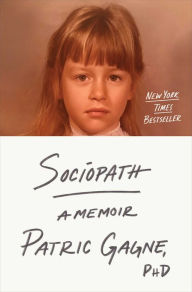
6. Death in Venice by Thomas Mann
The aging writer Gustav von Aschenbach takes a holiday in Venice, where he becomes infatuated with the beauty of fourteen-year-old Tadzio. I think Mann is a master at capturing the darker, less visible realms of human desire. Venice itself becomes a symbol of Aschenbach's slow disintegration, and by the end, the cholera that envelops the city (but remains hidden from the tourists by authorities who try to mask it with ammonia) foreshadows the fate of Aschenbach, who tries to mask his own degeneration with grotesque makeup.
7. My Name is Asher Lev by Chaim Potok
A beautiful account of how a boy from a Hassidic Jewish family must slowly relinquish his ties to his family as he grows as an artist. Art and religion don't always mix, and Potok paints a heartbreaking portrait of an artist who is made to choose between the two.
8. Maus by Art Spiegelman
Much has been said and written about whether the Holocaust can ever lend itself to humor. Maus, in my opinion, shows that it can, but only in the hands of someone as delicate, talented, and intelligent as Spiegelman. Told entirely through comic strips that are at once heartbreaking and humorous (the Jews are mice, the Germans are cats), these two volumes stayed with me long after I had put them away.
9. The Stranger (L'Etranger) by Albert Camus
Camus invented the idea of the "absurd," which refers neither to the absurdity of man, nor that of nature, but to the inability of the two to coexist. In this book, he captures this conflict through Meursault's inability to showcase the emotion expected of him at his mother's funeral, his quest the following morning for sensual pleasure on the sizzling shores of Algiers, and his final submission to the unbearably hot sun, which causes him to murder a man he doesn't even know. In a detached, unsentimental style, Camus paints the portrait of the "stranger"- who, we realize, is everyone. (I first read this book in high school and was completely mesmerized by it. It was an optimal time, no doubt, to be reassured that everyone else is a stranger too!)
10. Waiting by Ha Jin
I am amazed by how Ha Jin was able to make a protagonist as passive as Lin Kong so compelling. Having agreed to an arranged marriage, Lin, a doctor, spends the following decades of his life working and living in a military hospital (in Communist China) where he falls in love with a nurse, and attempting - but failing - on his yearly visits back home, to get a divorce. Much of this book, as the title suggests, is about inaction, but by carefully painting the many conflicts - both internal and external - that haunt the protagonist, Ha Jin turns this inaction into a forceful intrigue.
What types of music do you like? Is there any particular kind you like to listen to when you're writing?
Iranian classical music - such as Dastan Ensemble, Shahram Nazeri
Iranian pop (1970s): Googoosh, Haydeh, Satar
Pop/rock/folk (1960s & 1970s): Bob Dylan, Carole King, Neil Young, The Who, Serge Gainsbourg, Alain Souchon, Veronique Sansson, Charles Aznavour
Brazilian bossa nova: Chico Buarque; Elis Regina; Antonio Carlos Jobim; Joao Gilberto
If you had a book club, what would it be reading -- and why?
We would be reading poetry and prose written by a selection of poets, including Fernando Pessoa, Elizabeth Bishop, Emily Dickinson, and Pablo Neruda. This would give the group a chance to explore the relationships between these poets' verse and prose.
What are your favorite kinds of books to give -- and get -- as gifts?
I think photography books make wonderful gifts. Among the most beautiful books I've received are Iran Diary:1971-2001 (by the photographer Abbas) and Henri Cartier Bresson: The Man, the Image, the World.
Do you have any special writing rituals? For example, what do you have on your desk when you're writing?
I like to start with a good, strong, cup of coffee. I also tend to read some poetry before writing. (I try to read out loud if possible.) I usually write at home in the morning and head to cafes in the afternoon. At home, I like having my cat Leo nearby. Usually he sits on the bed and watches me for a while, then dozes off. (Admittedly, watching someone writing at a desk isn't very stimulating!)
Many writers are hardly "overnight success" stories. How long did it take for you to get where you are today? Any rejection-slip horror stories or inspirational anecdotes?
I started this book seven years ago. Prior to that, I had begun, and abandoned, two other novels. I think it takes many years and a lot of self-awareness to understand what it is you really want to say and how you want to say it. I don't have any rejection horror stories because I simply didn't send anything out until I felt I had something solid to share.
What tips or advice do you have for writers still looking to be discovered?
I really don't have any. I think every writer needs to find his or her own way.